
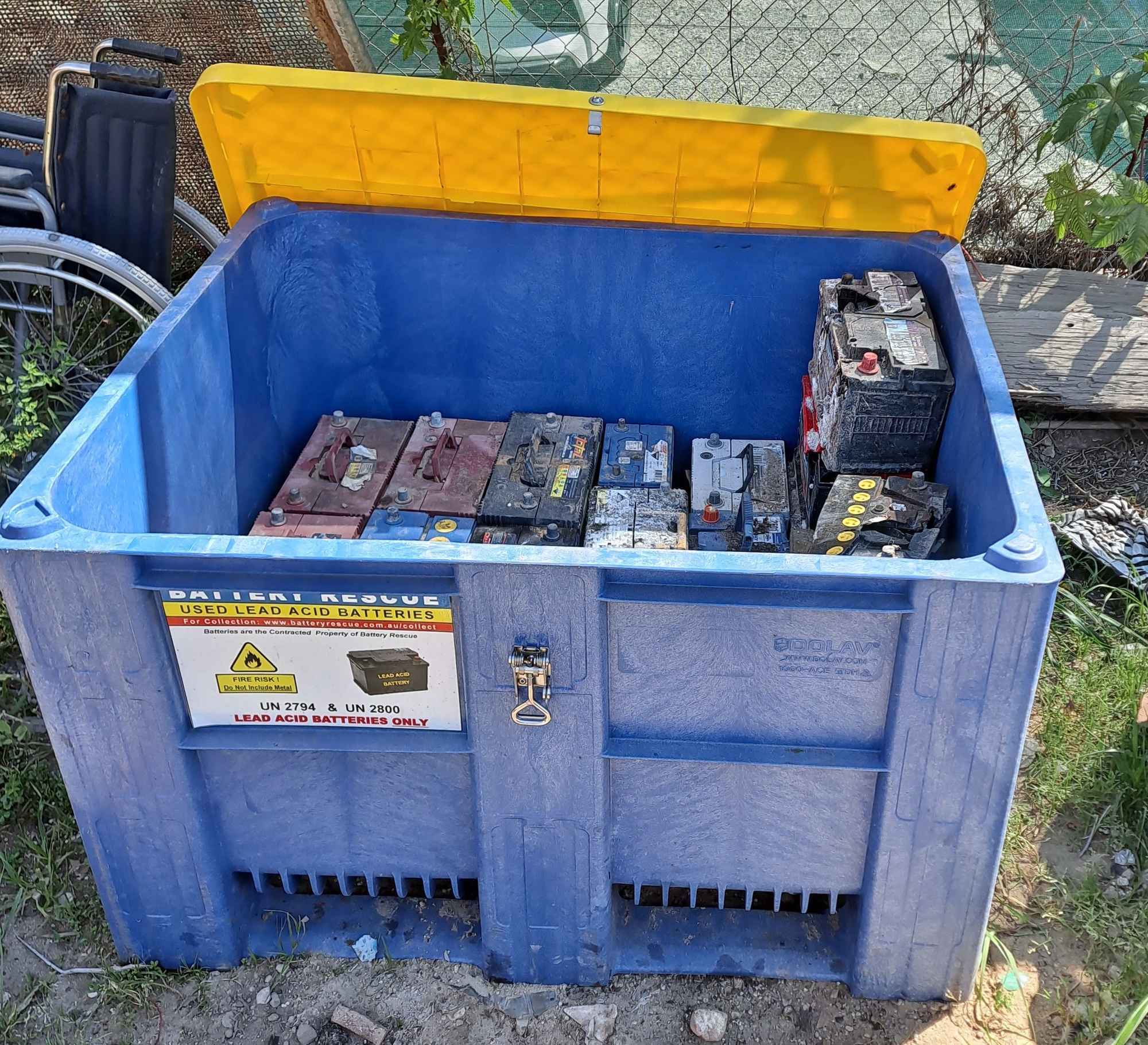
Uniseg Products' sister company Battery Rescue has run a demonstration battery collection service in Western Australia since 2015. The company has predominantly used Uniseg's Battery Transport & Storage (BTS) Container for its collection service; however, it has also deployed a limited number of plastic battery bins to test the pros and cons of each.
The plastic battery bin was introduced in 2018 and offered to all customers as an alternative to the BTS Container. Approximately 10% of customers, or 2% by volume, accepted the plastic bins — usually because Battery Rescue was able to pay them more for their batteries.
Advantages of the Battery Transport & Storage (BTS) Container
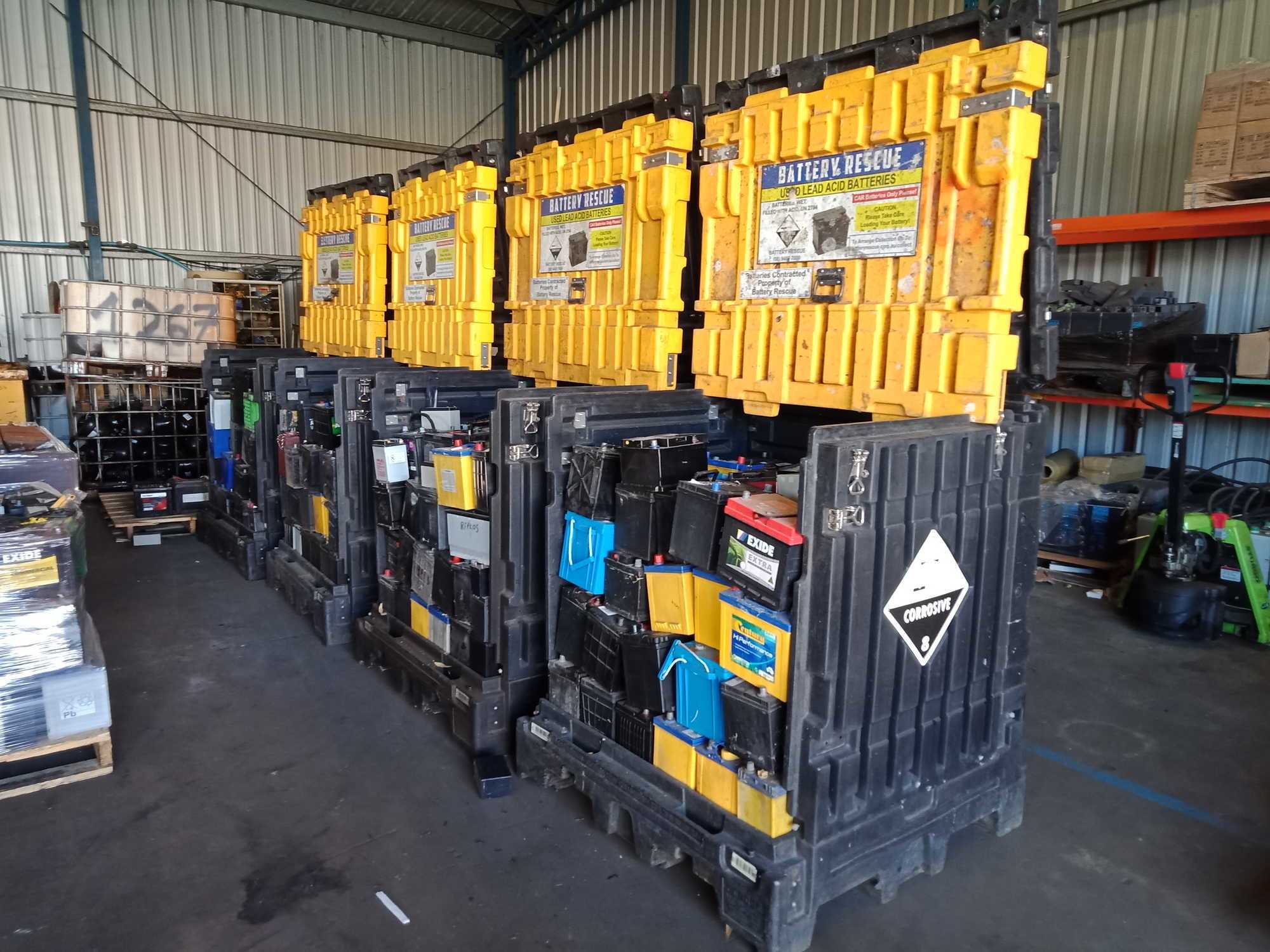
The most significant finding was that most of Battery Rescue's customers — especially Government Waste Facilities and mining customers — would not accept the plastic bins, citing safety concerns about lowering heavy batteries into the bottom of the bin. This confirmed that the front-load feature of the BTS Container, which allows customers to step in and place their batteries into the container, was a critical advantage over plastic battery bins.
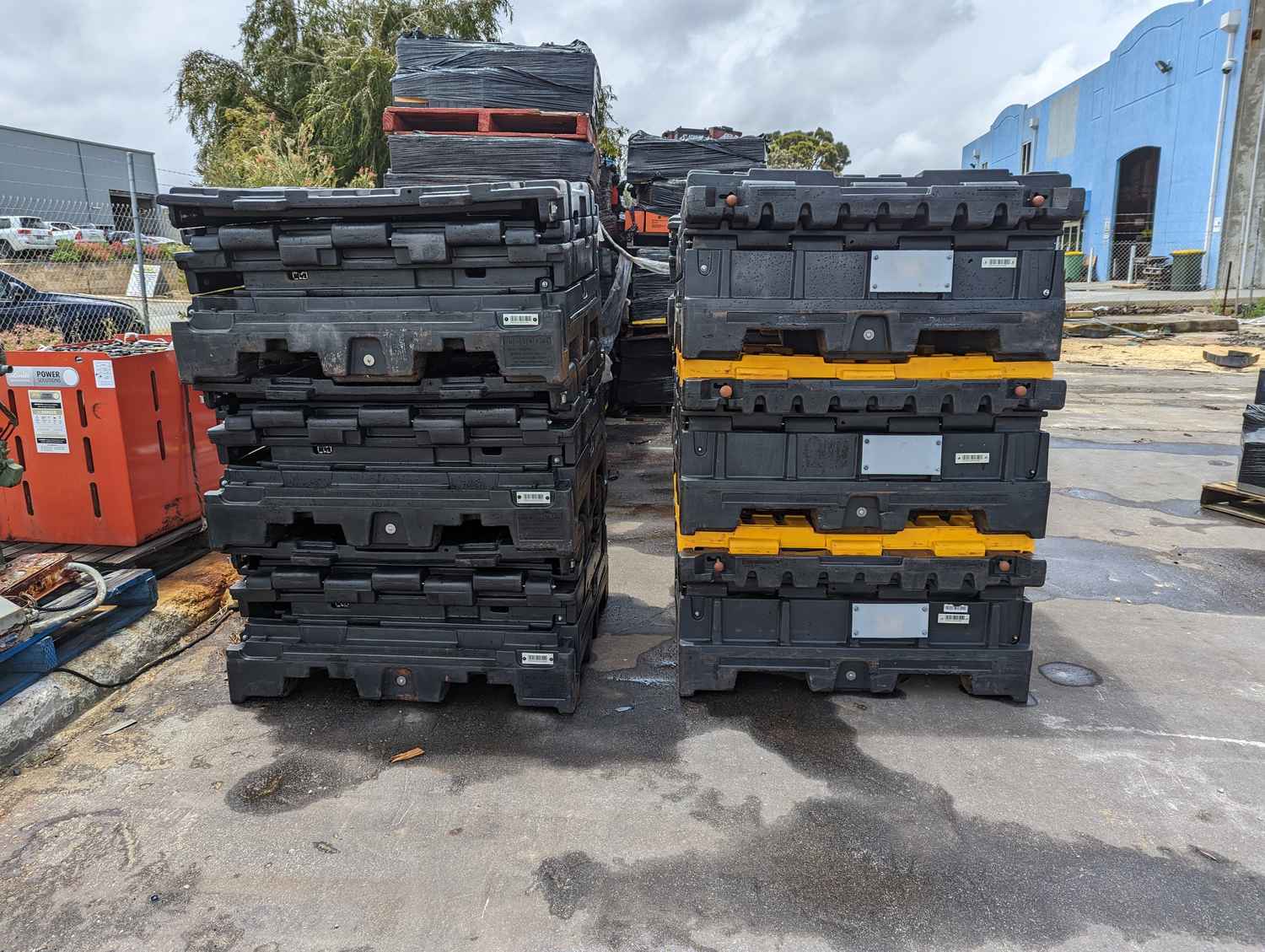
It was also found that the floors of plastic battery bins were more prone to cracking, due to operators dropping rather than lowering heavy batteries — some weighing up to 50–60 kg — into the bin. This is not an issue with the BTS Container, owing to its front-load feature. Battery Rescue also found that the collapsible design of the BTS Container made it more efficient for storage and transportation when empty.
Meeting the New Transport Requirements for Used Lead Acid Batteries
Recent changes to the regulations governing the transportation of used lead acid batteries have highlighted additional benefits of the BTS Container over plastic battery bins. The UN Sub-Committee of Experts for the Transport of Dangerous Goods approved a new Packing Instruction (P801) for transporting wet lead acid batteries in June 2018.
The new provisions for plastic bins require that:
- bins shall not be filled to a height greater than the height of their sides
- measures shall be taken to ensure that filled bins cannot lose their content
- the outside of bins shall be free of electrolyte residue
- measures shall be taken to prevent short circuits.
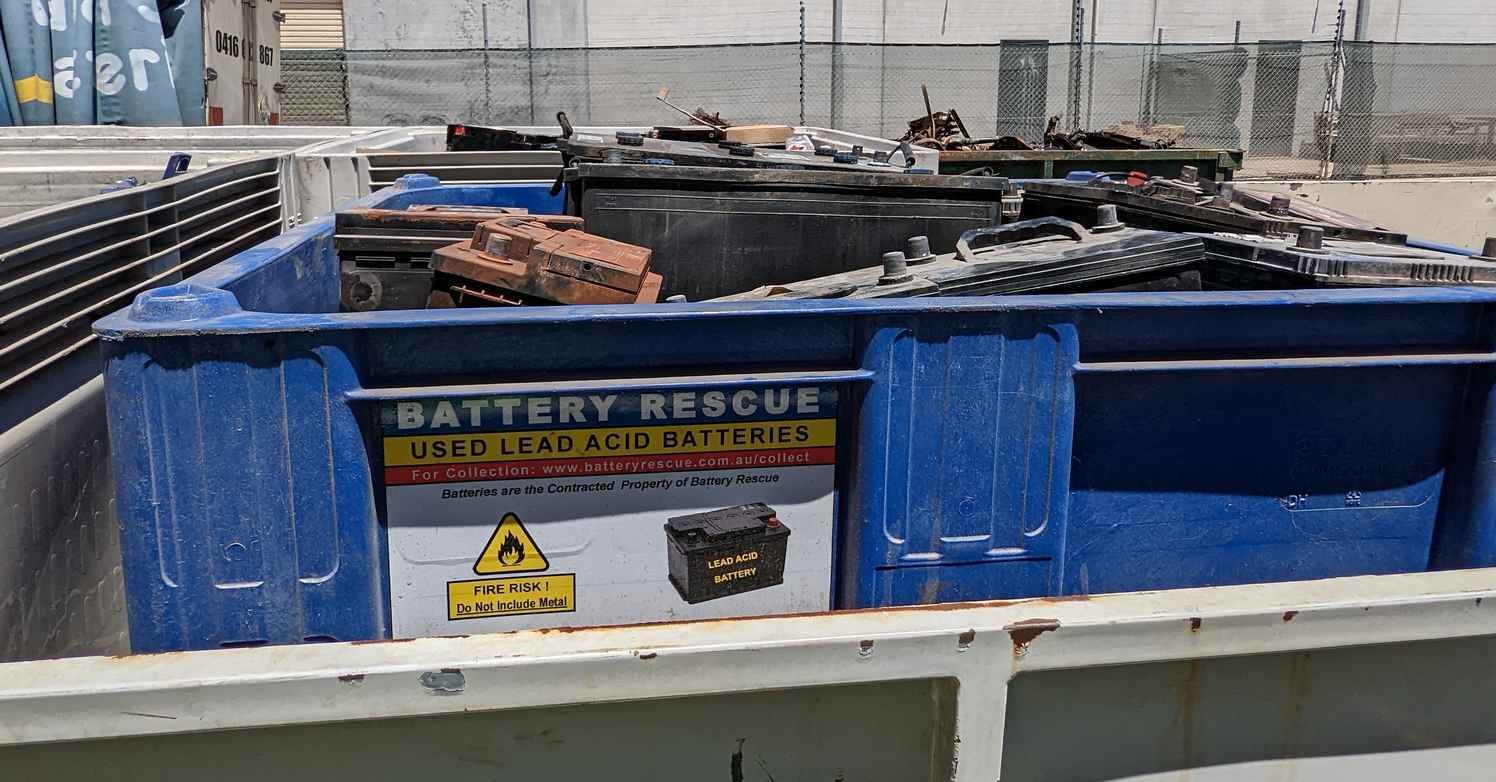
In practice, the most common issue is that customers often stack batteries above the height of the bin's sides, which not only contravenes the requirements but also makes it impossible to secure the lid before transport. In comparison, the BTS Container has a permanently attached lid that cannot be lost or blown off, making it much better suited to outdoor storage.
Advantages of Battery Bins
The primary advantage of plastic bins is cost. They are typically half the price of the BTS Container (including a lid). Using a high-pressure water gun, they are also easier to clean manually, owing to their smooth interior surfaces and lighter weight (35 kg vs 95 kg), making them easy to manoeuvre by hand.