
Used Lead Acid Battery Storage Regulations — Australia
Understand used car battery storage requirements and used lead acid battery transport regulations in Australia, including environmental, workplace safety and dangerous goods obligations.
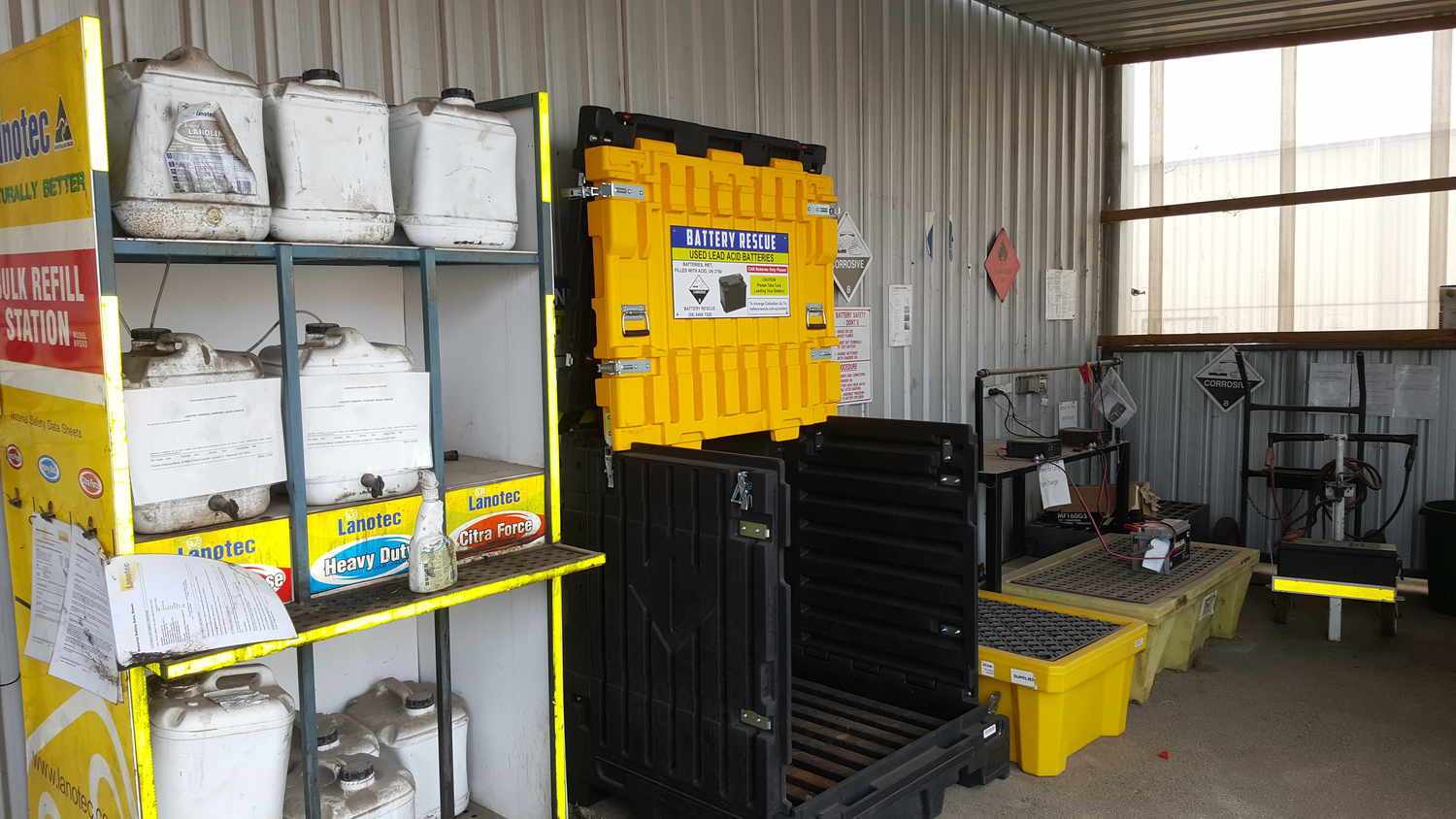
Which Australian rules apply to used lead acid battery storage and transport?
Used lead acid battery storage regulations in Australia involve state and territory environmental requirements, workplace safety duties and road transport laws including dangerous good transport regulations. Used car battery storage requirements depend on your location and operation; check the requirements of your environmental regulator.
Used lead acid battery transport regulations are separate from site storage rules. Acid-filled batteries can be classified as dangerous goods, while waste classification and licensing obligations also need to be checked. The Australian Dangerous Goods Code sets road and rail requirements, with any exemptions dependent on meeting their conditions.
There are several regulations that govern the storage and transport of new and used or waste lead acid batteries in Australia. In general, these regulations are enacted at the state level, however increasingly many of these are based on National Model Laws and Regulations, so that there is a degree of national harmonisation.
Looking for US regulations for used lead acid or car batteries? View the US regulations guide.
Lead acid batteries are classified as a dangerous good while used or waste batteries are also classified as a hazardous waste. Below is an overview of the Australian regulations for their safe storage and transport by road and rail.
Storage regulations
Used lead acid batteries are a dangerous good and hazardous waste, and their storage is controlled by several regulations.
Work Health and Safety Regulations
In recent years most Australian states and territories have transitioned away from maintaining their own Work Health and Safety (WHS) laws and regulations and have adopted the Model WHS laws developed by Safe Work Australia in 2011. These model laws create a level of standardisation between states and territories.
It is up to each state and territory to enact the laws, and they are responsible for regulating and enforcing them. For NSW and Queensland, the WHS Regulations are the primary regulations governing the handling and storage of dangerous goods such as lead acid batteries. Other states, including South Australia, Victoria and Western Australia, also maintain separate Dangerous Goods (Storage and Handling) Regulations.
Relevant WHS chapters and requirements for new and used lead acid battery storage and handling include:
- Hazardous manual tasks. Batteries often exceed the recommended lifting weight of 20 kg, so appropriate lifting precautions need to be considered.
- Hazardous atmospheres. Batteries, particularly new batteries under charge, are a potential ignition source.
- Hazardous chemicals, including safety data sheets and other obligations.
- Registers and manifests of hazardous chemicals.
- Placards and site identification.
- Control of risk obligations for persons conducting businesses or undertakings.
- Health monitoring.
- Induction, information, training and supervision.
You can find the regulations relevant to your state using search terms such as “WHS Regulation [your state]” and “Dangerous Goods Storage and Handling Regulations [your state]”.
Dangerous Goods Storage and Handling Regulations
The Northern Territory, South Australia, Victoria and Western Australia currently maintain separate regulations for the storage and handling of dangerous goods. These regulations usually include a test to determine whether a site is a small-quantity dangerous goods location or a dangerous goods site. A dangerous goods site must apply for and be granted a licence.
The test criteria are based on the volume of battery acid present at the site plus the presence of other dangerous goods. If the acid volume is not known, as is usually the case for used batteries, a nominal figure of 25% of the gross battery weight may be used. For example, 1,000 kg of batteries would contain approximately 250 L of acid.
You can determine whether your site is a small-quantity DG site or a DG site that requires licensing by reviewing your state-based regulations. Searching for “Dangerous Goods Storage and Handling Regulations [your state]” should provide a link to the relevant regulation.
Hazardous Waste Storage Regulations
Waste or used lead acid batteries are classified as hazardous or controlled waste in every state. There is no National Model Law for this area, and each state has developed its own regulations. This can be challenging for businesses with outlets in several states because the requirements vary.
To find the regulations relevant to your state, search for “Hazardous Controlled Waste Regulation [state]”. Under most state environmental regulations, it is an offence to allow hazardous waste such as acid to discharge into the environment. Used lead acid batteries should therefore be stored in a bunded area or container and preferably undercover.
Transport regulations by road and rail
As a dangerous good and hazardous waste, the transport of used lead acid batteries is controlled by several regulations.
Australian Code for the Transport of Dangerous Goods by Road and Rail
The Australian Dangerous Goods Code (ADGC) sets out the requirements for transporting dangerous goods by road or rail. The code is maintained and updated by the National Transport Commission, and each state has incorporated it into its own dangerous goods transport regulations.
General requirements such as packaging, labelling, dangerous goods documentation and vehicle placarding are therefore consistent for transporting lead acid batteries in each state. State dangerous goods transport regulations vary in areas such as supply-chain member duties, licensing requirements and penalties.
The transport requirements for lead acid batteries were updated in the ADGC in October 2020, adopting changes approved by the UN Sub-Committee of Experts on the Transport of Dangerous Goods in June 2018.
Load Restraint Requirements
The National Transport Commission’s Load Restraint Guide provides the basic safety principles for the safe carriage of loads, including how to meet vehicle load-restraint performance standards.
Anyone involved in packing, loading, moving or unloading a vehicle is responsible for complying with load restraint laws. Western Australia and the Northern Territory’s heavy vehicle laws currently reference the 2004 guide.
Heavy Vehicle National Law
The Heavy Vehicle National Law applies to heavy vehicles over 4.5 tonnes in most Australian states and territories, with the Northern Territory and Western Australia being exceptions.
Chain-of-responsibility provisions mean consignors and their executives can be held legally liable for failing to meet requirements. For vehicles under 4.5 tonnes gross mass, these provisions do not apply, but load restraint requirements still do.
Hazardous Waste Transport Regulations
Each Australian state and territory has developed regulations for transporting waste or used lead acid batteries. The requirements vary, particularly for organisations with premises in multiple states. Provisions that are typically common include:
- The transport provider must have a controlled waste licence for used lead acid batteries. Different controlled waste licences apply to different types of waste.
- The vehicle must display the appropriate controlled waste signage.
- The vehicle must carry suitable spill-containment equipment.
- The driver must have an emergency response plan.
- Suitable containers must be used to prevent leakage of fluid and waste into the environment.
Interstate transport of waste or used lead acid batteries is governed by the National Environmental Protection (Movement of Controlled Waste Between States and Territories) Measure, which has been enacted in each state. The NEPM is designed to ensure interstate transport of controlled waste is handled in an environmentally sound way.
Use a container designed for safer battery storage and transport
Uniseg Products developed a collapsible plastic container for the storage and transport of used lead acid batteries.
The Battery Transport & Storage (BTS) Container is patented in several countries. It delivers a safer, more convenient alternative while reducing the environmental impact of storing and transporting used lead acid batteries.
The BTS Container was built to help operators move closer to compliance by design.
If you need a container that supports safer handling, leak containment and more efficient battery collection logistics, start with the BTS product page.