
Car Battery Collection — A Closed-Loop BTS Container System
A used lead acid battery collection system built around the BTS Container: deploy at source, exchange when full, transport to the recycler, clean and redeploy.
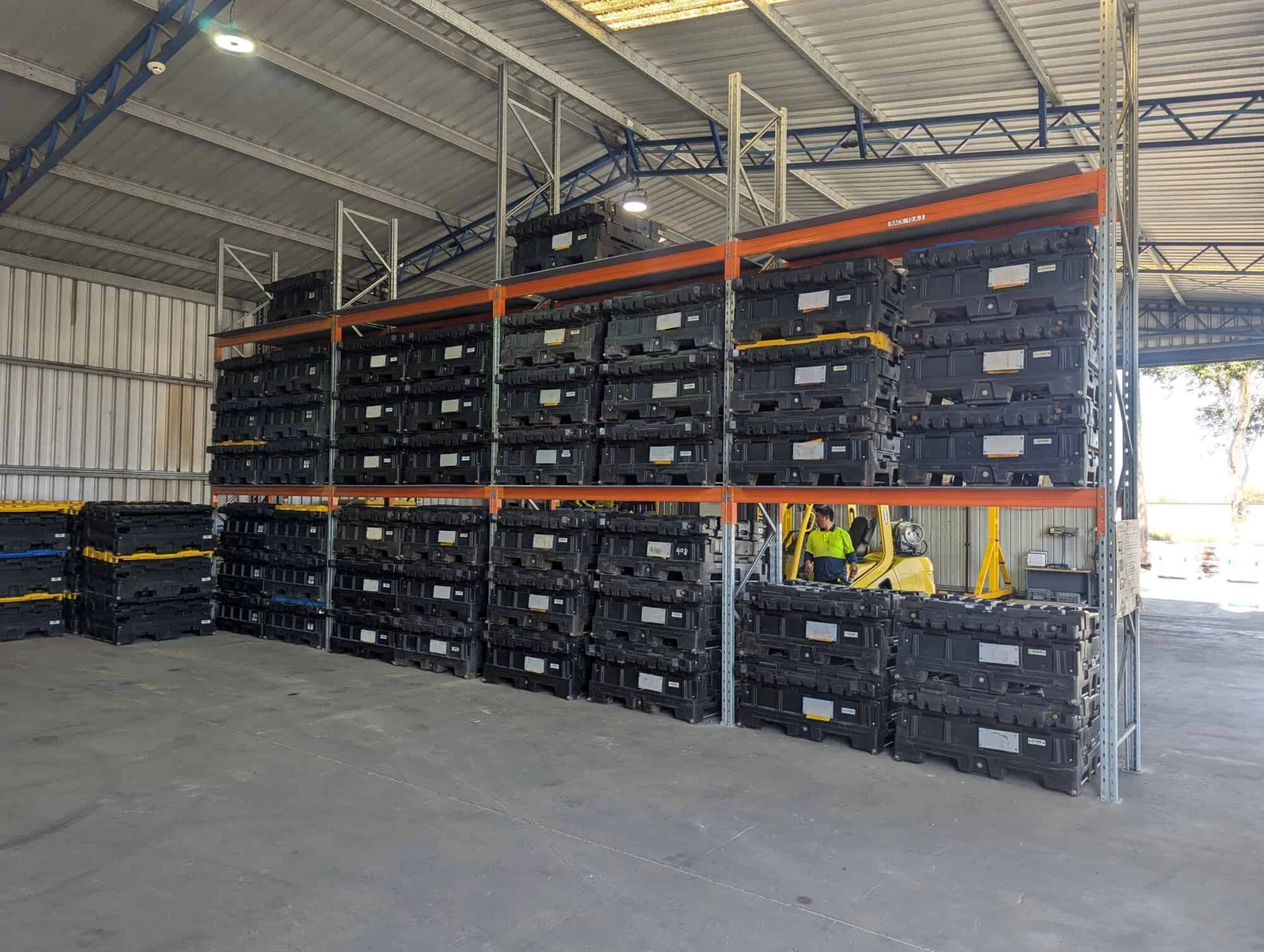
Who supplies a used car battery collection service or collection system?
For car battery collection in Western Australia, Battery Rescue operates a used lead acid battery collection service using BTS Containers. For operators seeking to establish or expand their own service, UNISEG supplies the container platform and offers licensing support.
The used lead acid battery collection model places containers at generator sites, exchanges them when full, transports batteries to the recycler, then cleans and redeploys the containers. Outside Battery Rescue's service area, contact UNISEG to discuss equipment and licensing rather than assuming a local collection service is available.
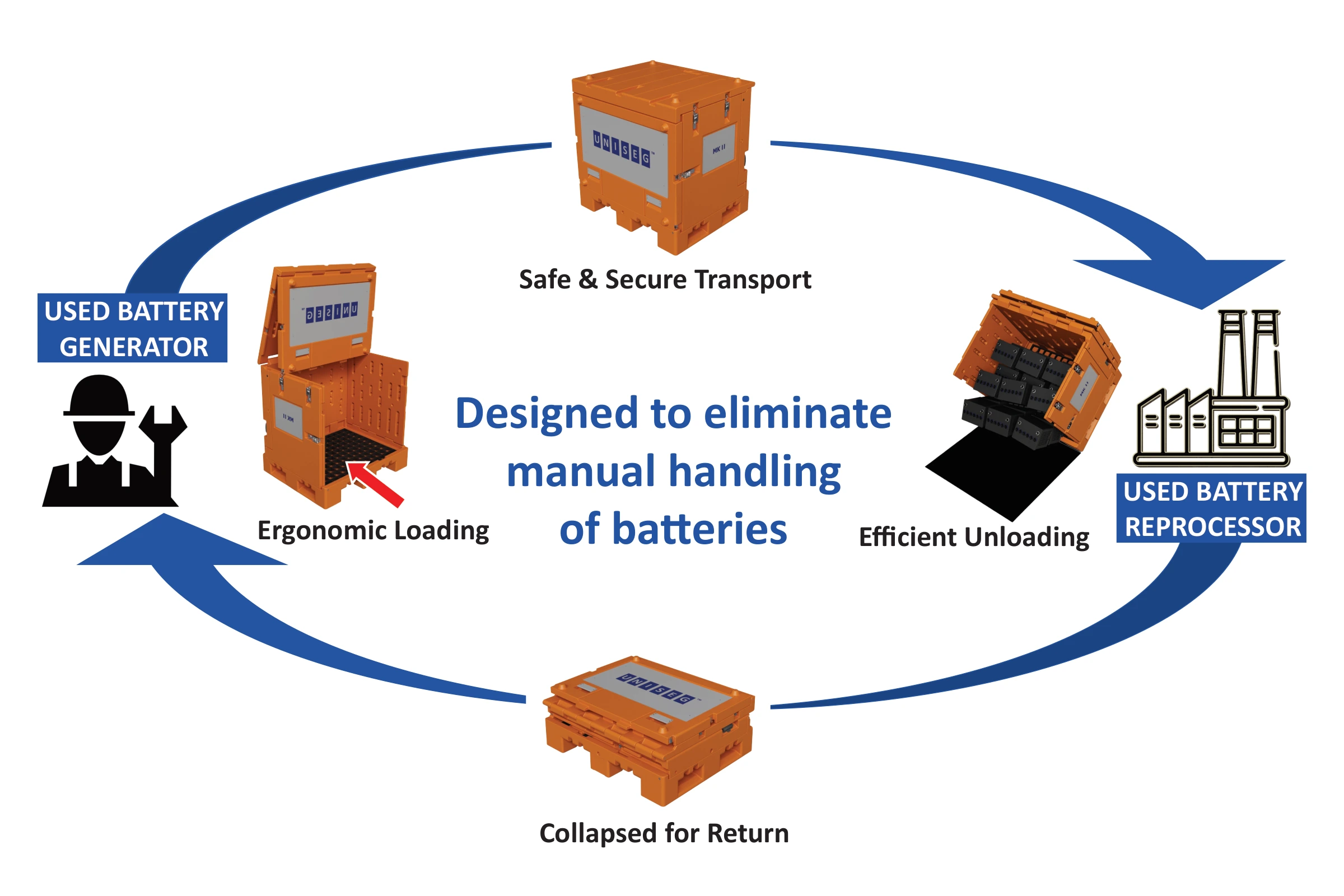
Used lead acid batteries are a high-volume hazardous waste stream. Traditional collection methods rely on improvised storage, manual restacking, and unsafe, regulation non-compliant practices. UNISEG's BTS Container system replaces that with a purpose-built closed-loop model: containers deployed at source, exchanged when full, emptied at the processor, collapsed flat, and returned for redeployment.
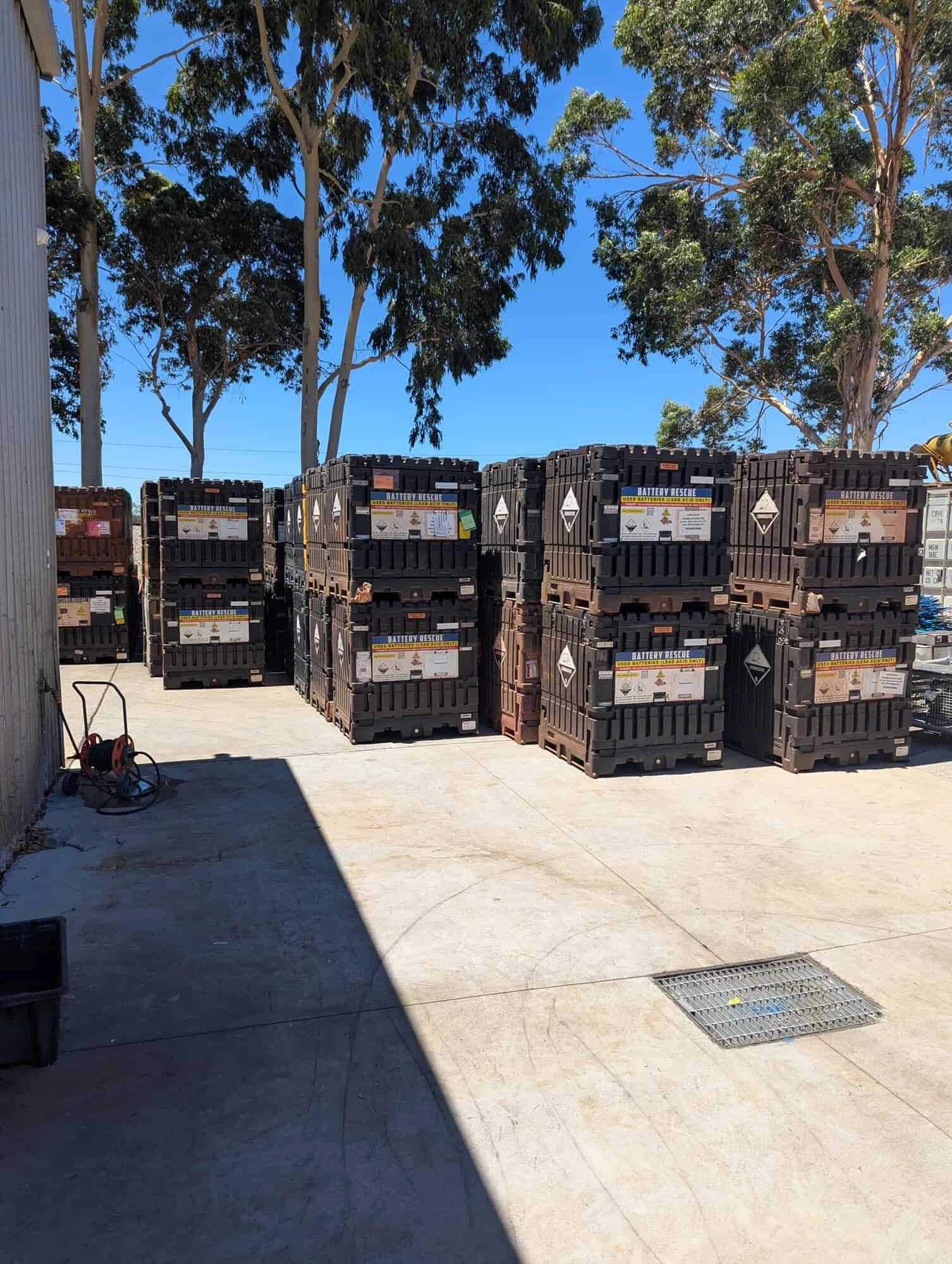
Battery Rescue Australia has been running this model since 2015 using BTS containers — with more than 500 units deployed at with customers.
The Closed-Loop Collection Model
Six steps from source to recycler and back — designed for operational efficiency at every stage.
Place empty BTS Containers at generator sites — automotive workshops, battery retailers, fleet depots, mining sites, or any location where used lead acid batteries accumulate.
Batteries are front-loaded by site staff in an ergonmically safe manner. The integrated lid stays with the container during loading and the BTS takes under 30 seconds to secure for transport.
When a container is full, a collection vehicle swaps it for an empty. No unpacking, no restacking — the full sealed container moves directly onto the vehicle.
The sealed, latched container moves to the recycling facility with batteries contained, secured, and compliant for road transport. The bunded base contains any in-transit leaks.
At the processor, batteries are decanted (manually or via the side tyne bars for auto-unloading).
The container is cleaned, collapsed flat, stacked up to 6 high, ready for redployment with customers
The Business Case for a Container-Based Collection System
Batteries move from the generator site to the processor in the same container they were loaded into — without intermediate unpacking, restacking or pallet-wrapping. This reduces labour, improves safety and environmental outcomes, and speeds up collection cycles.
The BTS Container helps meet hazardous waste and dangerous goods storage & transport requirements (lidded, bunded, appropriately rated) so collection operators can manage their legal & insurance risks
The collapsible design means empty containers cost significantly less than rigid alternatives to transport. The ability to stack upto 6 high can ensure efficient use of valuable storage space.
In addition to capturing all acid leaks during the storage and collection phase, the BTS eliminates the waste generated packaging batteries on wood pallets, including the pallets themselves.
Proven Since 2015 — Battery Rescue Australia
Battery Rescue Australia is UNISEG's sister company and the operational proof-of-concept for the closed-loop collection model. Operating across Western Australia, Battery Rescue has deployed more than 500 BTS Containers at automotive workshops, council waste facilities, mining and industrial sites since 2015. In that time, only a total of 3 containers have required replacement.
Battery Rescue's experience has directly shaped the development of the BTS Container MK2, with every design improvement informed by real operational feedback from the field.
Interested in Running a Battery Collection Operation?
UNISEG licenses the collection system model to qualified operators who want to establish or scale a used battery collection business. Licensees gain access to the BTS Container platform, operational guidance, and the backing of a patented, proven system.